MLOps Core Systems Architecture

Three pillar architecture covering the complete ML lifecycle: Training Pipelines, Deployment & Operations, and Data & Feature Systems.

1. Training Pipelines

End-to-end ML platform implementations for automated model building, training, evaluation, and registration

End-to-End ML Platform
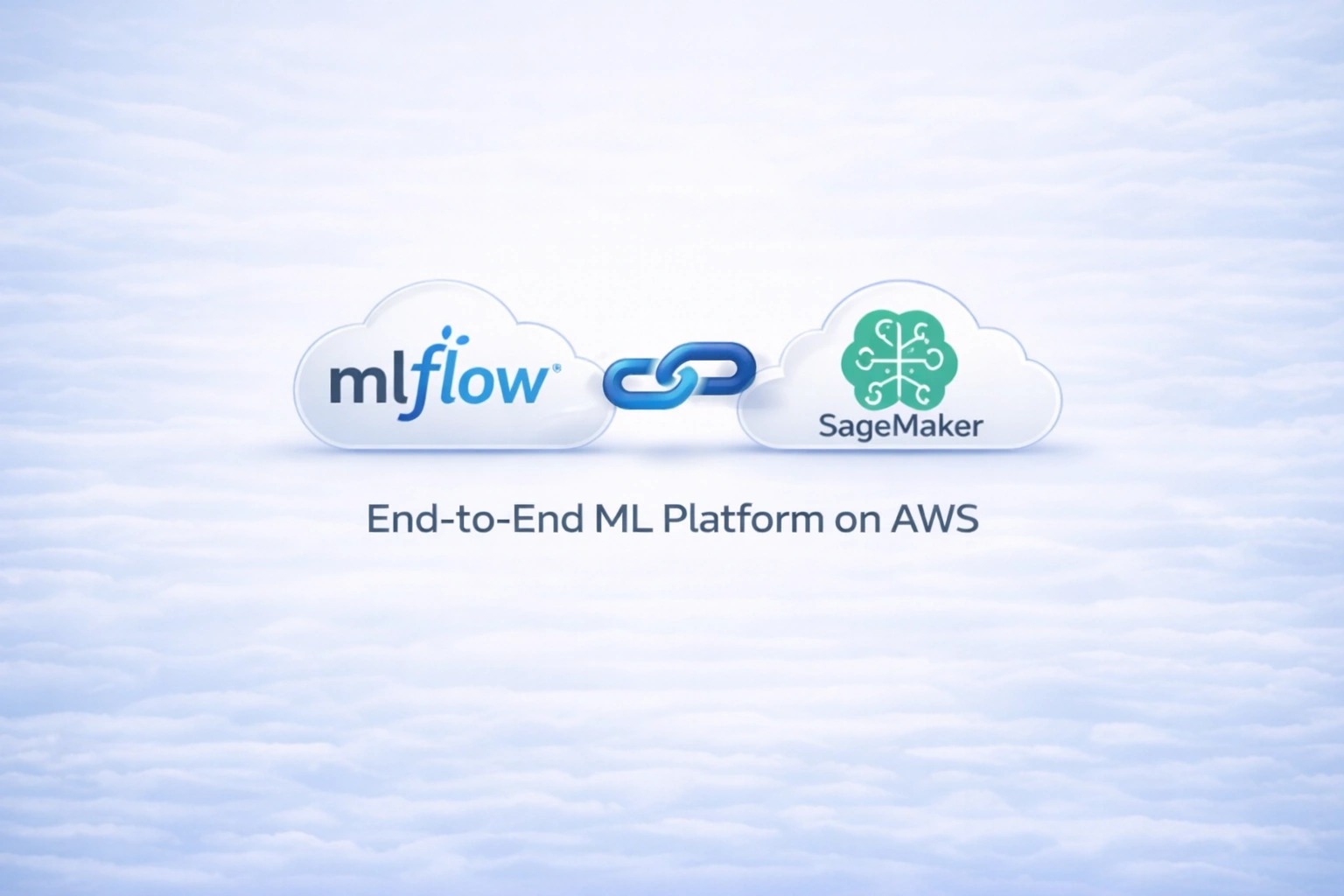
MLflow + SageMaker AWS Platform

End-to-End ML Platform on AWS (MLflow + SageMaker)

AWS

Production-grade ML platform with experiment tracking, model registry, and SageMaker-based training & deployment, provisioned using AWS CDK Infrastructure as Code.

AWS CDK (Python IaC) MLflow SageMaker ECS Fargate RDS MySQL S3 Artifacts
Experiment Tracking Model Registry Infrastructure as Code Production ML Platform
MLflow tracking server on ECS Fargate with RDS + S3 backend
SageMaker training jobs integrated with remote MLflow tracking
Infrastructure fully provisioned using AWS CDK (IaC)
Model promotion and deployment via MLflow → SageMaker endpoints
CI/CD ML Pipeline
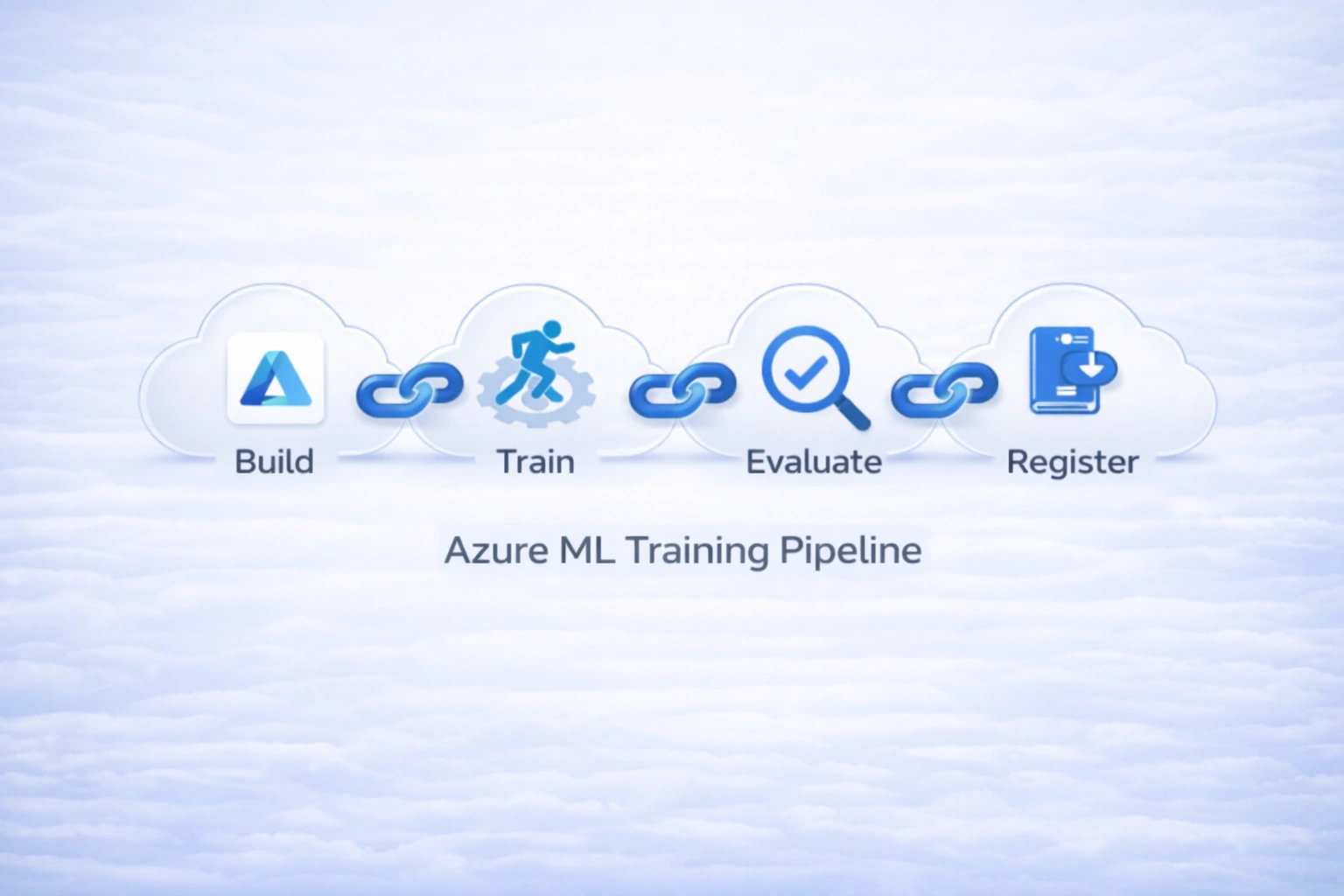
Azure ML Training Pipeline

Azure ML Training Pipeline (Build → Train → Evaluate → Register)

Azure

Production-grade Azure ML pipeline that automates model building, training, evaluation, and governed registration using CI/CD-driven orchestration with experiment tracking and promotion gates.

Azure ML Pipelines MLflow Tracking Azure DevOps Model Registry CI/CD for ML Reproducible ML
Training Automation Model Registration Experiment Tracking CI/CD Driven
Azure ML pipeline orchestrated via Azure DevOps YAML pipelines
Standardized data prep, training, evaluation on hold-out data
Conditional model registration into MLflow Model Registry
MLflow experiment tracking for metrics, parameters, artifacts
CI/CD ML Pipeline
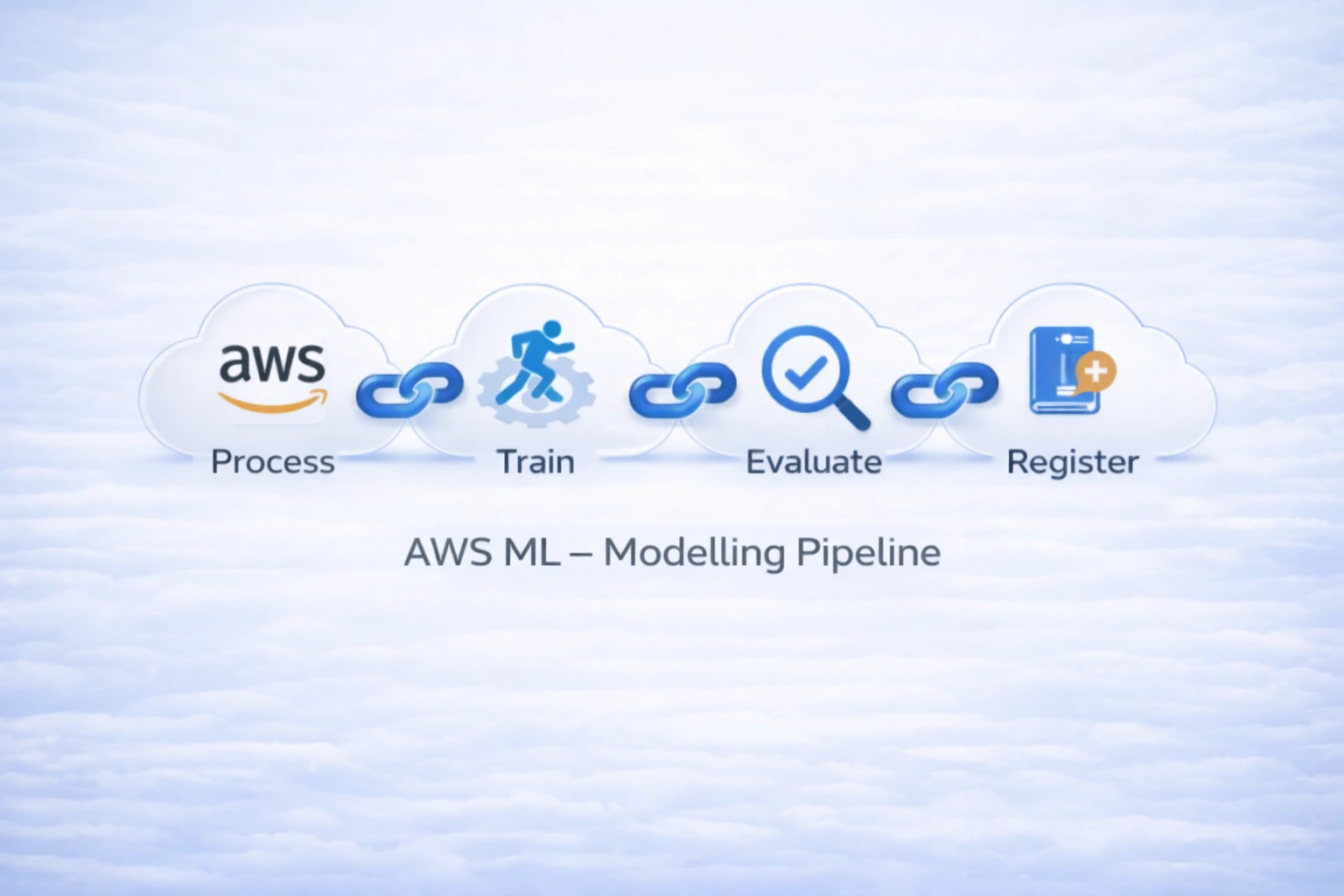
AWS SageMaker MLOps Pipeline

AWS ML – Modelling Pipeline (Process → Train → Evaluate → Register)

AWS

Fully automated ML training pipeline on AWS: data preprocessing, XGBoost training, evaluation with conditional quality gate (MSE), and governed model registration in SageMaker Model Registry. Triggered via GitHub Actions + OIDC.

SageMaker Pipelines GitHub Actions OIDC → IAM Amazon ECR S3 Artifacts Model Registry XGBoost
Training Automation Model Registration Quality Gates CI/CD Driven
SageMaker Pipeline: Process → Train → Evaluate → Conditional Register
Quality gate with MSE threshold – auto‑reject underperforming models
Conditional registration into SageMaker Model Registry with approval workflow
OIDC authentication between GitHub Actions and AWS (no static secrets)
CI/CD ML Pipeline
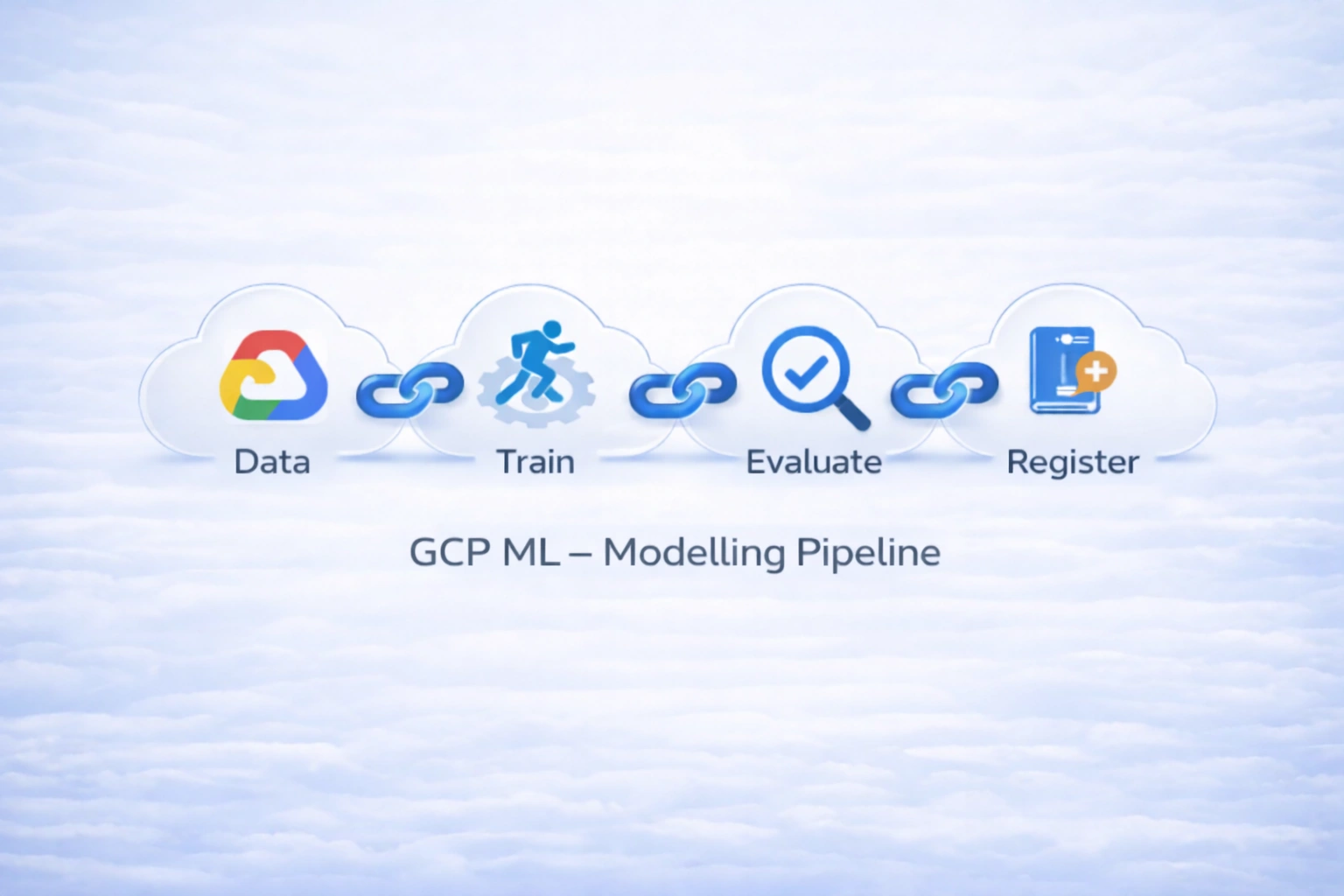
GCP Vertex AI MLOps Pipeline

GCP ML – Modelling Pipeline (Data → Train → Evaluate → Register)

GCP

Production‑grade ML training, evaluation, gating, and conditional registration pipeline on Google Vertex AI using Kubeflow Pipelines (KFP v2). Enforces model quality, tracks lineage, and registers only validated models in Vertex AI Model Registry.

Vertex AI Pipelines Kubeflow Pipelines v2 Vertex AI Training Vertex AI Metadata Cloud Storage Model Registry Workload Identity
Training Automation Model Registration Quality Gates ML Governance
Vertex AI Pipelines (KFP v2): Data Prep → Train → Eval → Conditional Register
Evaluation gate with accuracy/ROC threshold – auto‑reject underperforming models
Conditional registration into Vertex AI Model Registry with version tracking
Artifact persistence in GCS + lineage tracking in Vertex AI Metadata Store
Kubeflow MLOps
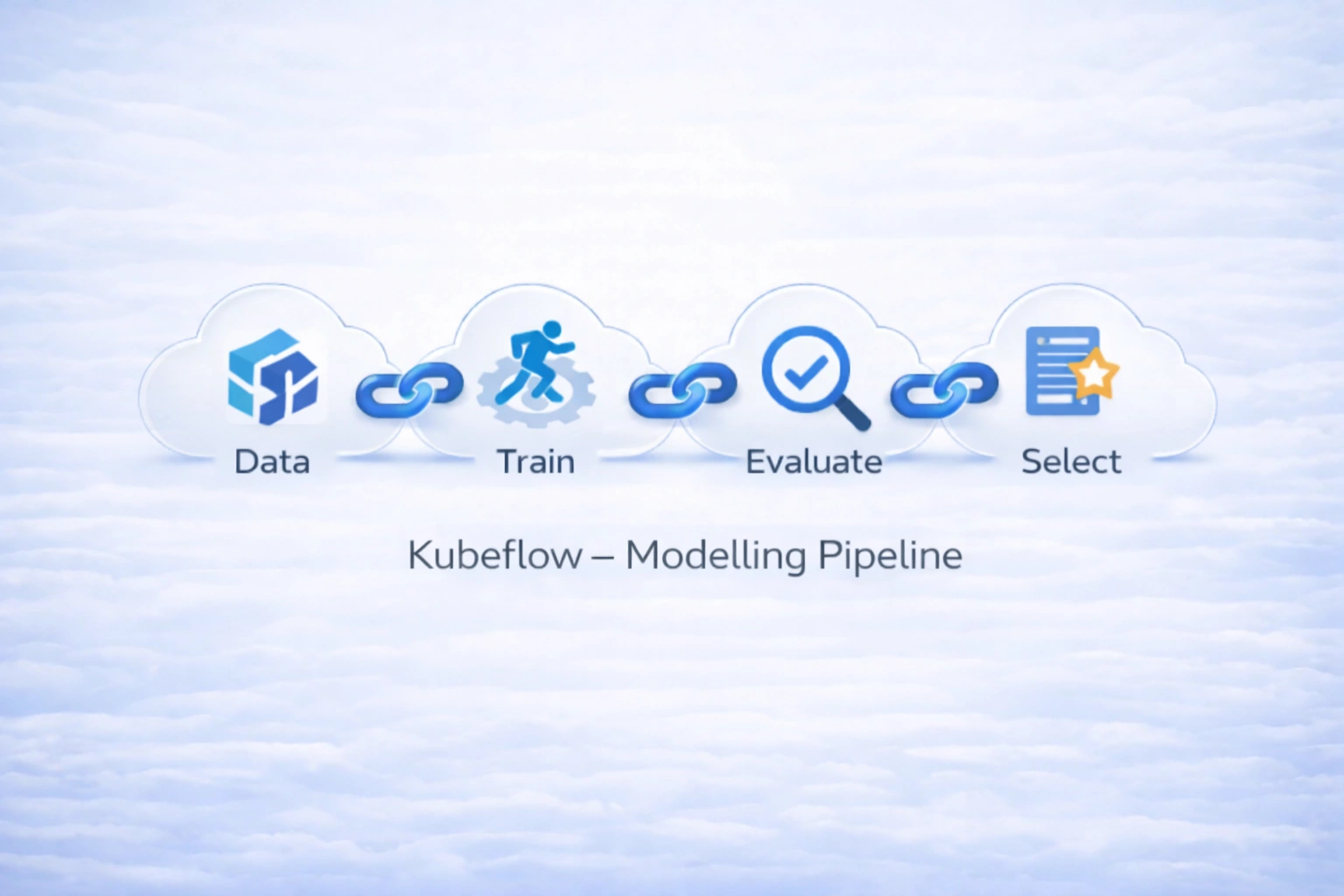
Kubeflow MLOps Pipeline

Kubeflow – Modelling Pipeline (Data → Train → Evaluate → Select)

Kubeflow

Production‑style ML training and evaluation pipelines using Kubeflow Pipelines (KFP v2) with containerized components, artifact lineage, and metric‑driven model selection across multiple algorithms (LR, DT) for optimal model governance.

Kubeflow Pipelines v2 Argo Workflows Kubernetes Containerized Components MinIO Artifact Store ML Metadata Docker
Training Automation Model Selection Algorithm Comparison ML Governance
KFP v2 DAG: Data → Train (LR/DT) → Evaluate → Metric‑Driven Selection
Containerized ML components with scikit‑learn (Logistic Regression, Decision Tree)
Evaluation with accuracy metrics & model comparison for optimal selection
Artifact lineage in ML Metadata Store + versioned storage in MinIO (S3‑compatible)

2. Deployment & Operations

Production-grade model deployment pipelines, serving infrastructure, and operational monitoring systems

Production Deployment
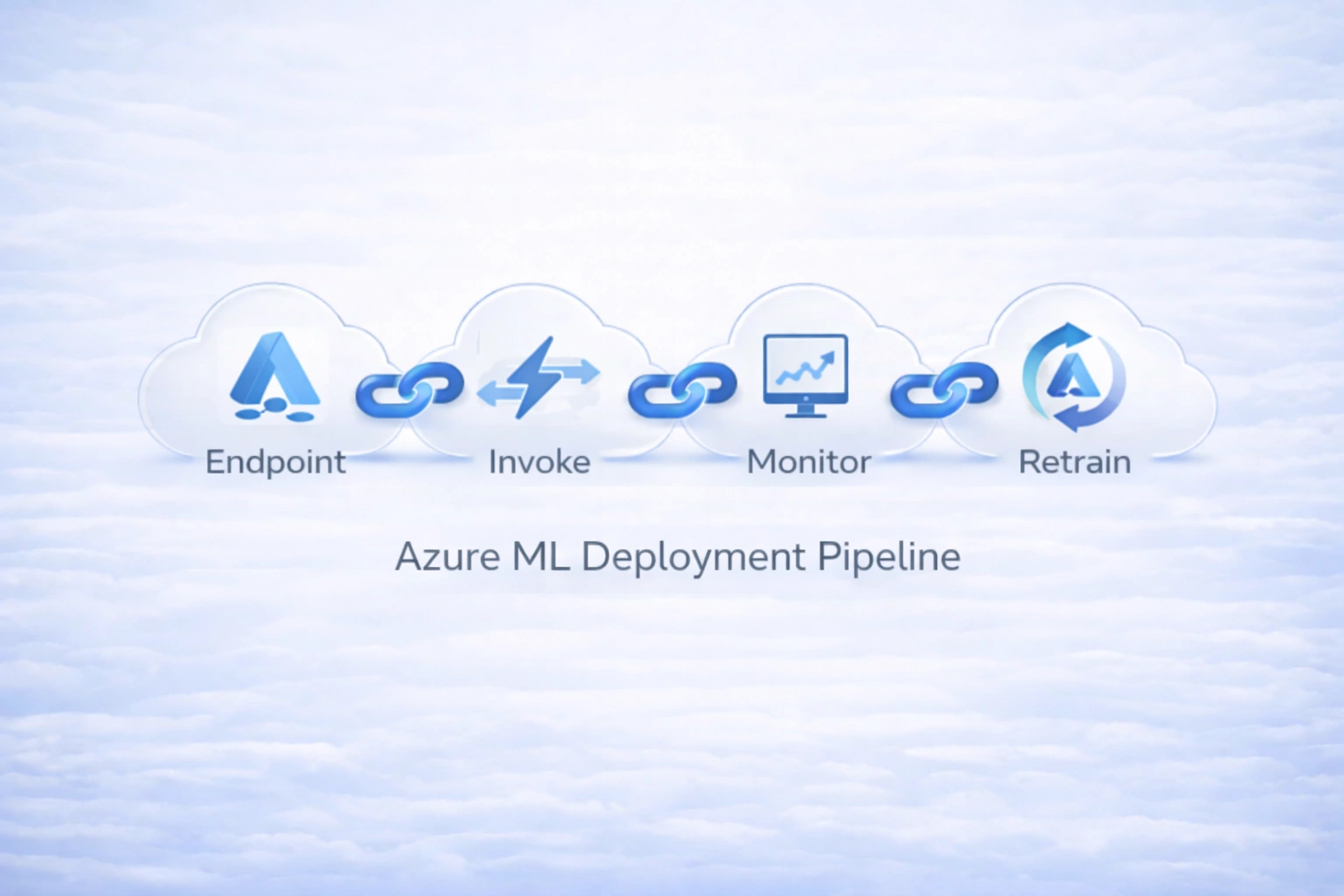
Azure ML Deployment Pipeline

Azure ML Deployment Pipeline (Endpoint → Invoke → Monitor → Retrain)

Azure

Production-grade Azure ML deployment pipeline that automates endpoint creation, model serving, traffic routing, validation, monitoring, and retraining orchestration using CI/CD.

Azure ML Managed Endpoints Azure DevOps Traffic Routing Model Monitoring Automated Retraining Blue/Green Deployment
Model Serving Traffic Routing Production Monitoring Automated Retraining
Managed online/batch endpoints with traffic routing control
Blue/green-style rollouts through traffic routing
CI/CD gating with automated smoke tests for validation
Operational hooks for retraining triggers and scheduled runs
Model Serving
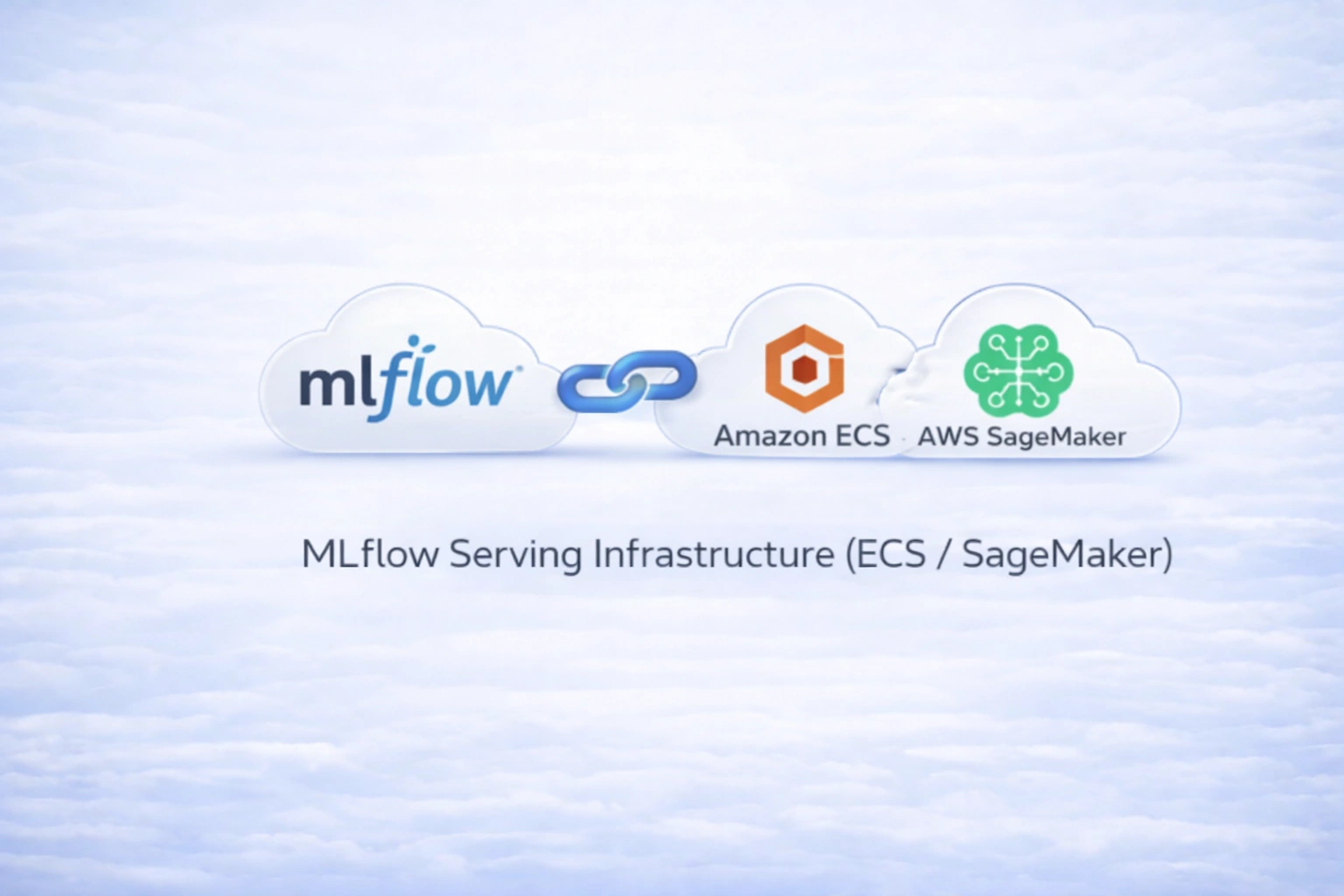
MLflow Serving Infrastructure

MLflow Serving Infrastructure (ECS / SageMaker)

MLOps

Custom MLflow inference containers and SageMaker endpoint deployment for production model serving with custom Docker images, ECR integration, and real-time inference capabilities.

Docker Amazon ECR SageMaker Endpoints MLflow PyFunc Custom Containers Real-time Inference
Inference Containers Model Serving Real-time Deployment Custom Docker
Custom MLflow inference containers built and pushed to Amazon ECR
SageMaker real-time endpoints with MLflow model registry integration
Blue/green model updates via MLflow versioning
Cost-aware endpoint management and deletion practices
MLOps Deployment
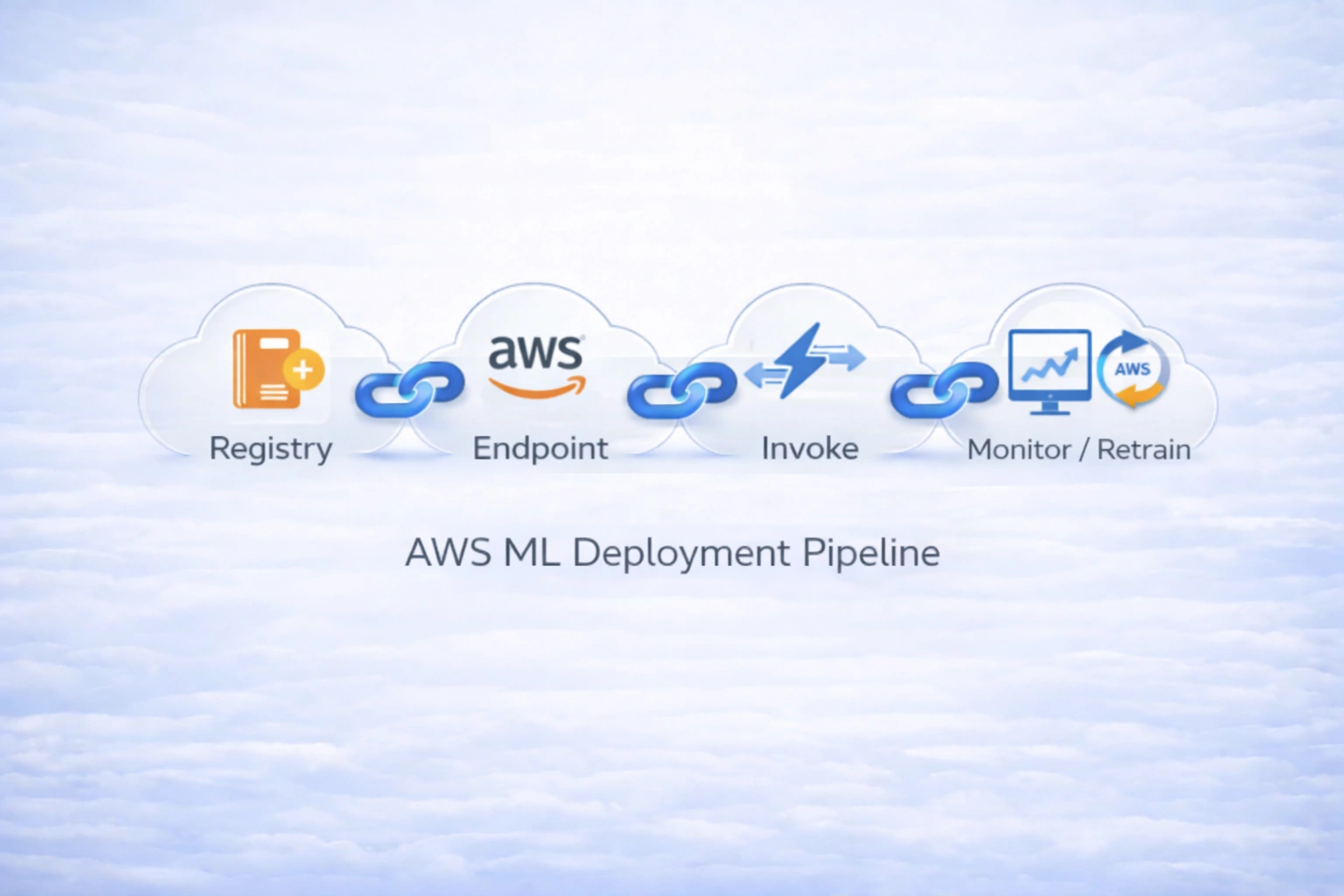
AWS SageMaker Deployment Pipeline

AWS ML Deployment Pipeline (Registry → Endpoint → Invoke → Monitor / Retrain)

AWS

Automated promotion of approved models from SageMaker Model Registry to real‑time endpoints using AWS CDK and CI/CD (GitHub Actions + OIDC). Multi‑environment (dev, pre‑prod, prod) with least‑privilege IAM, KMS encryption, and integrated monitoring for retraining triggers.

AWS CDK SageMaker Endpoints Model Registry GitHub Actions OIDC → IAM CloudWatch KMS Encryption Multi-Environment
Model Deployment Endpoint Promotion Infrastructure as Code Model Monitoring
Registry-driven promotion: fetch latest Approved model → deploy to SageMaker endpoint
Multi-environment deployment (dev, pre-prod, prod) with YAML-driven configuration
Secure CI/CD with GitHub Actions + OIDC authentication to AWS (no static secrets)
CloudWatch monitoring for endpoint health, metrics, and automated retraining triggers
MLOps Deployment
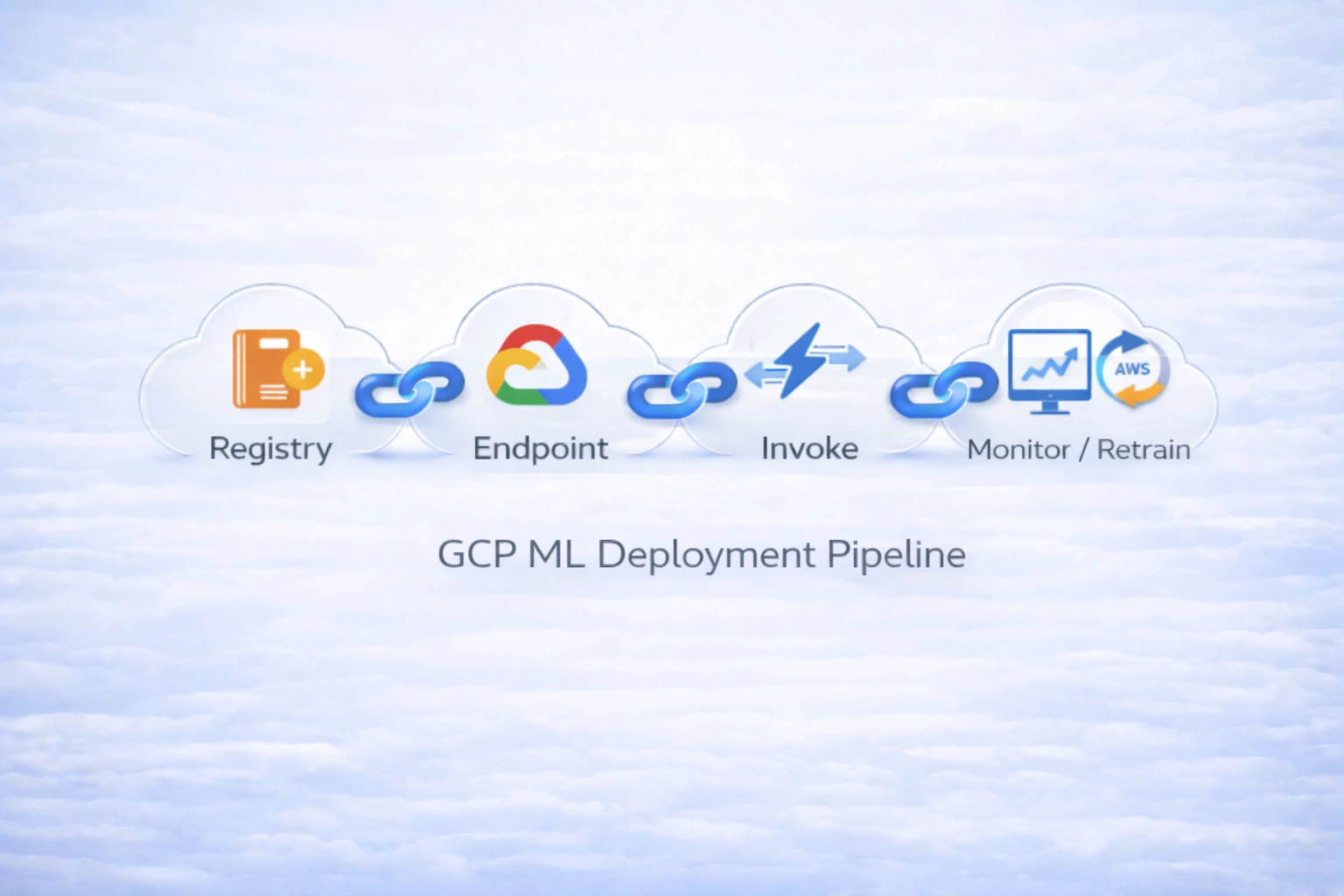
GCP Vertex AI Deployment Pipeline

GCP ML Deployment Pipeline (Registry → Endpoint → Invoke → Monitor / Retrain)

GCP

Production‑grade model deployment pipeline on Google Cloud with Vertex AI Endpoints, traffic splitting (blue/green, canary), and scheduled retraining. Automates model promotion from Vertex AI Model Registry to managed online inference endpoints with integrated monitoring and continuous refresh loops.

Vertex AI Model Registry Vertex AI Endpoints Traffic Splitting Cloud Scheduler GCS Artifacts Cloud Monitoring IAM Service Accounts KFP v2
Model Deployment Endpoint Promotion Traffic Management Scheduled Retraining
Registry‑driven promotion: approved models from Vertex AI Registry → managed endpoints
Advanced traffic management: blue/green deployments, canary rollouts with traffic splitting
Scheduled retraining with Vertex AI Pipelines (cron) for continuous model refresh
Integrated monitoring with Cloud Logging & Metrics → triggers retraining pipeline
ML Deployment
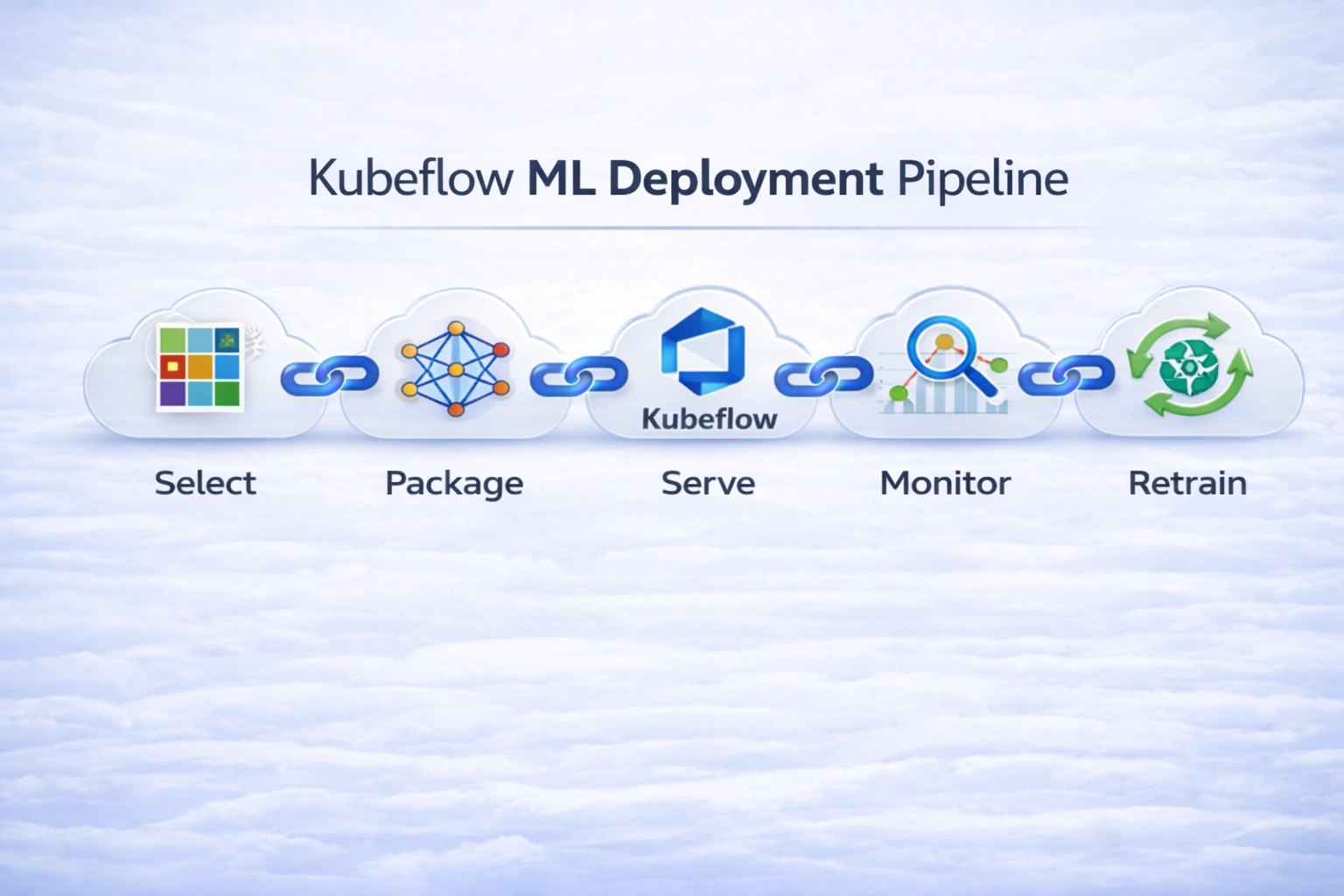
Kubeflow ML Deployment Pipeline

Kubeflow ML Deployment Pipeline (Select → Package → Serve → Monitor → Retrain)

MLOps

Production‑grade model deployment pipeline on Kubernetes with Kubeflow, KServe, and integrated monitoring. Automates metric‑gated model promotion from training pipelines to containerized inference services with traffic splitting (rolling updates, canary) and continuous retraining loops.

Kubeflow Pipelines KServe Kubernetes Docker Istio Prometheus Grafana RBAC
Model Deployment Containerized Serving Traffic Management Continuous Training
Metric‑gated promotion: validated models from Kubeflow Pipelines → production serving
Containerized inference: model artifacts packaged into custom Docker images
Advanced traffic management: rolling updates, canary rollouts with KServe/ Istio
Secure serving: Kubernetes Service Accounts + RBAC for auth/ authorization
Integrated monitoring: Prometheus metrics + Grafana dashboards → triggers retraining

3. Data & Feature Systems

Data versioning, feature store implementations, and reproducible data pipelines for ML systems

Data Versioning
DVC Data Version Control

DVC (Data Version Control) for ML Reproducibility

Data Systems

Git-like version control for datasets and ML artifacts with cloud storage integration (S3/Azure Blob), pipeline tracking, and reproducible ML workflows across training and experimentation cycles.

DVC Git S3 / Azure Blob Pipeline Tracking Data Lineage Reproducible ML
Data Versioning Pipeline Tracking Reproducibility Cloud Storage
Git-like version control for datasets, models, and artifacts
Cloud storage integration (S3, Azure Blob, GCS) for large datasets
Pipeline tracking and dependency management for ML workflows
Full reproducibility of experiments with data and code versions
Feature Store
Feast Feature Store

Feast Feature Store for Production ML

Data Systems

Production-grade feature store implementation for consistent feature engineering across training and serving, with unified feature repository, online/offline stores, and feature registry capabilities.

Feast Redis / PostgreSQL Feature Registry Online Serving Offline Storage Feature Engineering
Feature Store Feature Registry Online Serving Consistent Features
Unified feature repository for training and serving consistency
Low-latency online feature serving (Redis/PostgreSQL)
Historical feature storage for training (offline store)
Feature discovery and governance through feature registry