I design and build systems that connect AI with enterprise knowledge through prompts, context, retrieval, and intelligent assistants to deliver trusted, accurate, and business-aligned intelligence at scale.
Organizations face deep friction accessing scattered context. Connecting AI safely to knowledge layers requires addressing these 6 critical siloing challenges:
Information scattered across teams, systems, documents, and repositories.
Different employees get different information from the same question.
Time lost searching across multiple systems and documents.
Critical knowledge leaves when employees leave the organization.
AI cannot answer questions it cannot access or understand.
Models lack domain context, leading to generic and irrelevant responses.
Design structured prompts that improve consistency, reliability, and user interactions.
Build and manage dynamic context using instructions, examples, memory, and business data.
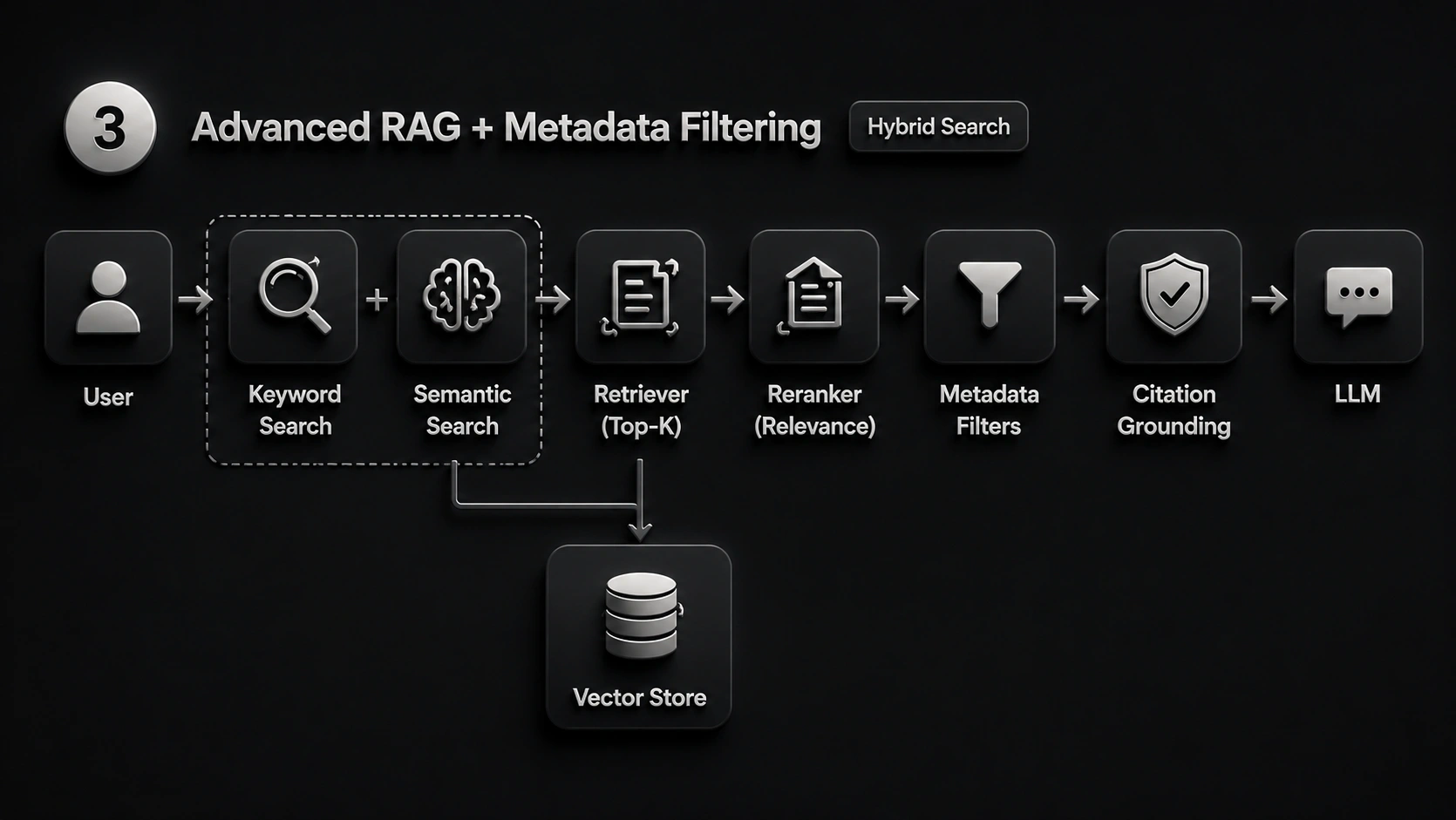
Implement semantic, hybrid (keyword + vector), and metadata search at scale.
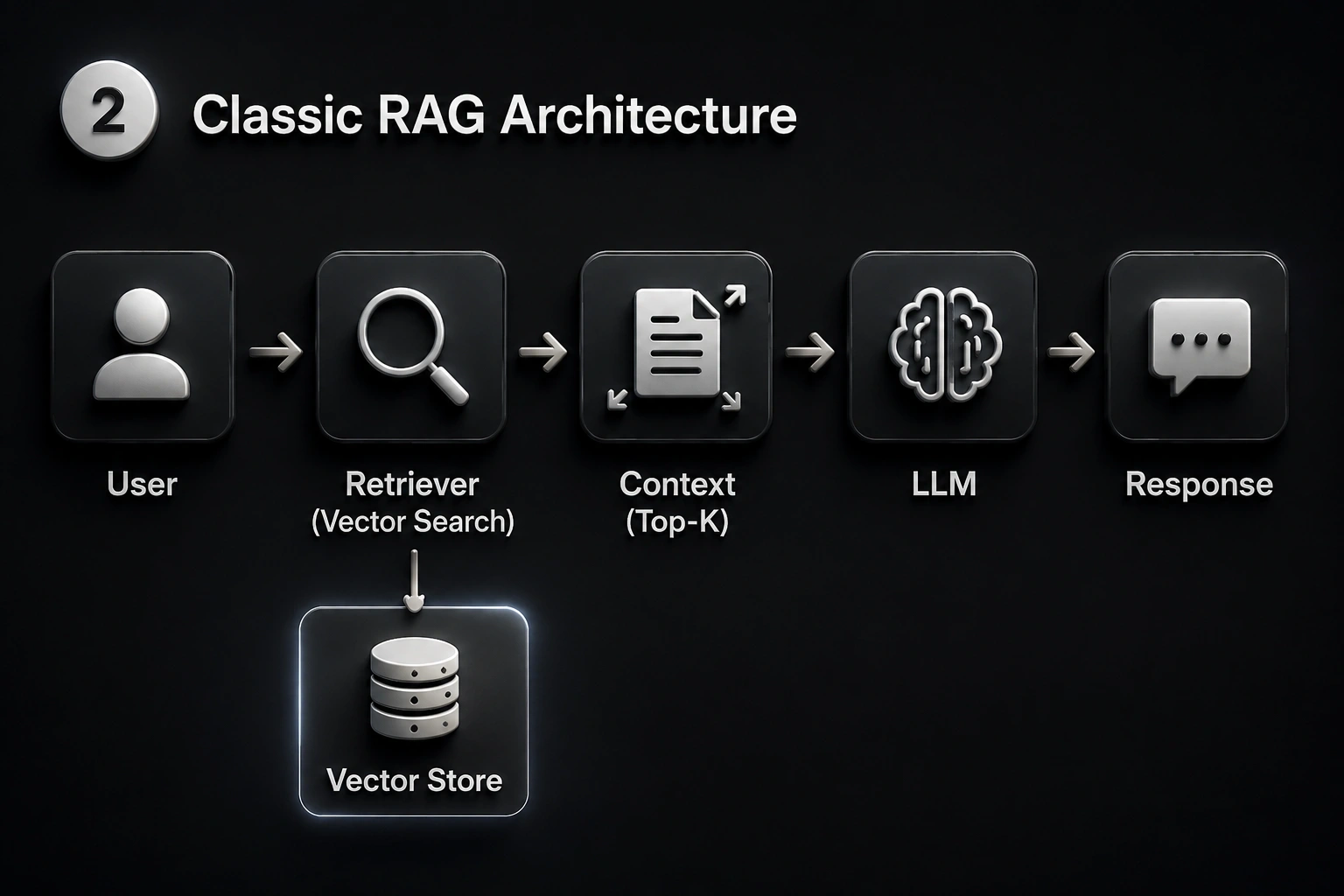
Apply retrieval strategies like Top-K, filtered, hybrid, and contextual retrieval.
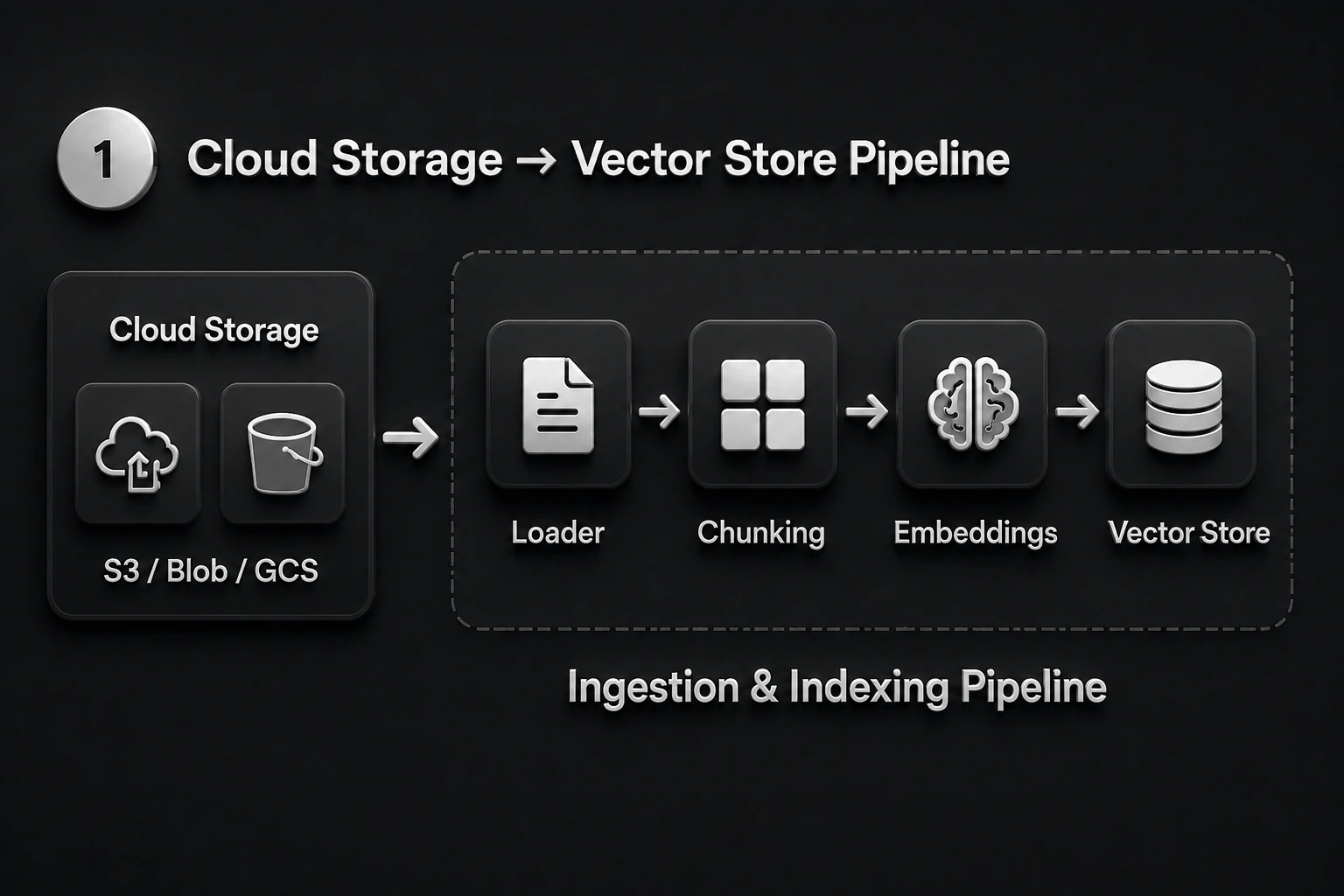
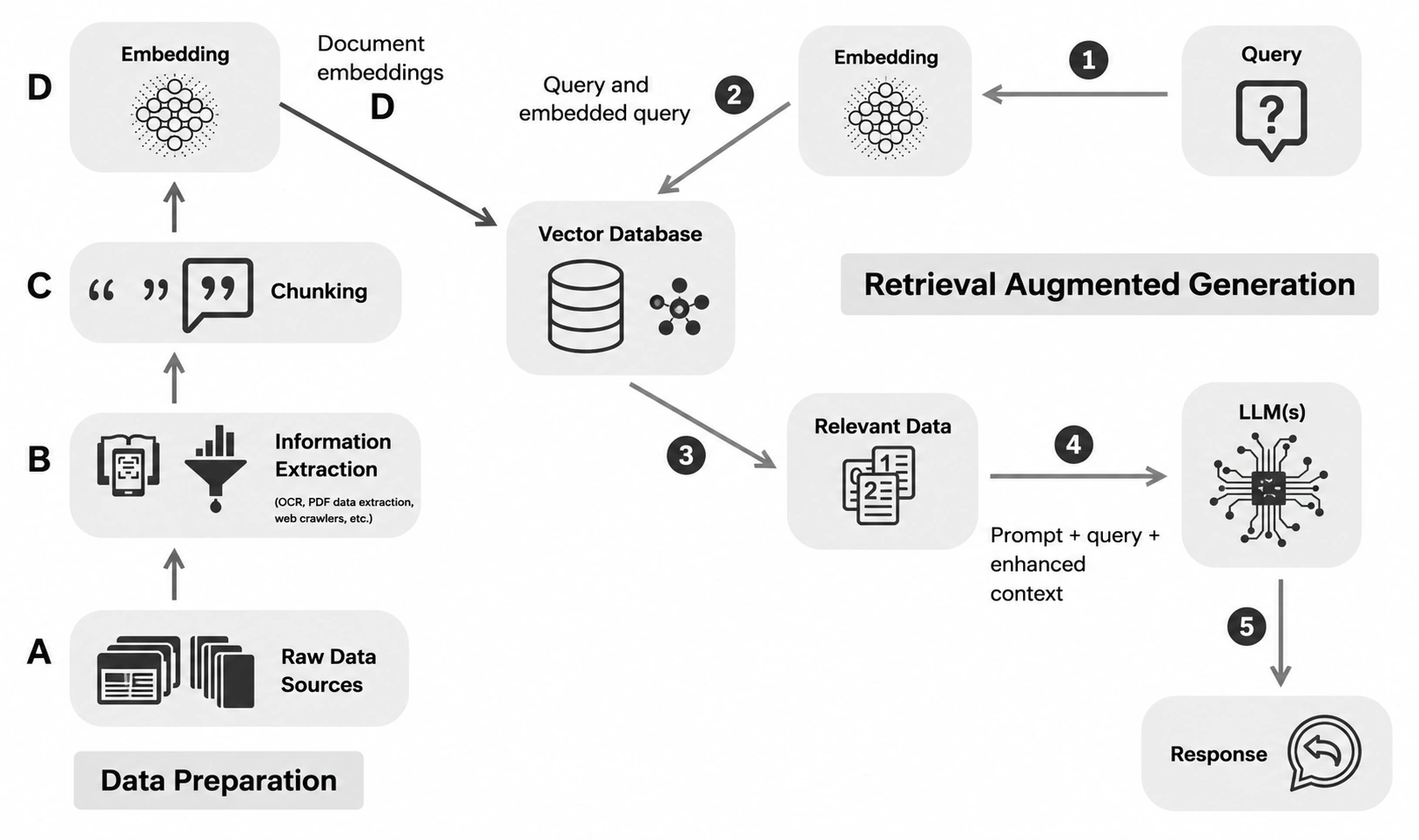
Chunk, embed and store documents in vector databases for similarity search.
Combine retrieved context with LLMs to generate accurate and grounded answers.
Use reranking, query expansion, compression and citation for higher precision.
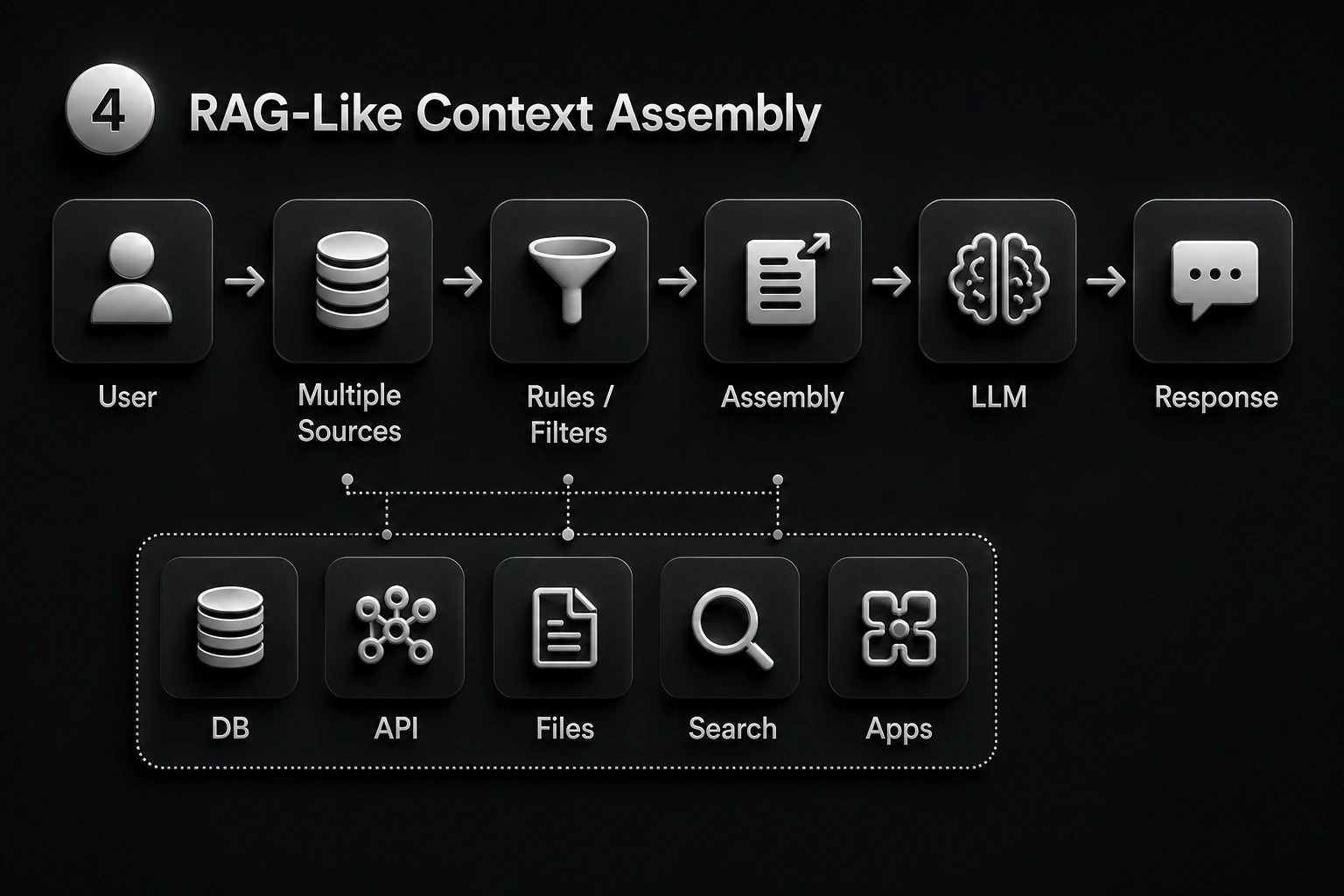
Build solutions using search, business rules, APIs and templates without vector DBs.
Build assistants that understand business context and deliver actionable insights.
Connect to S3, Blob, GCS, SharePoint, Google Drive, GitHub, and enterprise apps.
Ensure security, access control, compliance, and quality of enterprise knowledge.
Documents → loader parsing → chunk text splitter → model vectors embeddings → index database.
User input → retrieve vector database → assemble prompt context (Top-K) → run LLM → respond user.
Keyword matching + semantic dense retrieval → metadata filters → reranker scoring → LLM citations.
User routing → query database columns/APIs → apply business rule layers → contextual templates → LLM.
import boto3
s3 = boto3.client('s3')
def load_from_s3(bucket, key):
obj = s3.get_object(Bucket=bucket, Key=key)
return obj['Body'].read().decode('utf-8')
from langchain.text_splitter import RecursiveCharacterTextSplitter
splitter = RecursiveCharacterTextSplitter(
chunk_size=1000,
chunk_overlap=150
)
chunks = splitter.split_text(document_text)
import boto3
bedrock = boto3.client('bedrock-runtime')
def embed(texts):
response = bedrock.invoke_model(
modelId='amazon.titan-embed-text-v1',
body={'inputText': texts}
)
return response['body']
from opensearchpy import OpenSearch
client = OpenSearch(hosts=[{'host': 'search-endpoint'}])
# index vector
client.index(
index='knowledge-index',
body={'text': text, 'vector': embedding}
)
Interactive demos showcasing real-world knowledge systems and RAG applications built for the enterprise.
A serverless AI chatbot demonstrating prompt engineering without external retrieval. Built on AWS Lambda to deliver scalable, low-latency AI conversations with a lightweight architecture.
An AI-powered personal concierge that answers questions about Rajesh Arigala's professional experience, cloud expertise, technical skills, certifications, and collaboration capabilities using a RAG-like context system.
An enterprise Retrieval-Augmented Generation application that retrieves relevant knowledge before generating accurate responses using AWS cloud technologies.
A Docker-based travel assistant powered by Azure OpenAI and FAISS that retrieves knowledge from indexed documents to provide intelligent travel recommendations.
An enterprise website chat widget built using Azure AI Search that delivers fast, contextual responses and powers intelligent conversations on rajesharigala.com.
A healthcare-focused Retrieval-Augmented Generation chatbot developed for Dr. Madhu Patil's website, providing patients with trusted medical information through an intelligent conversational interface.
(5 Repositories) Advanced prompting techniques, serverless orchestration, text generators, and API connectors.
(1 Repository) RAG-Like systems implementing context loaders, business logic rules, and templates without vector DBs.
(1 Repository) Core knowledge retrievers, search integrations, and multi-document QnA agents with LlamaIndex and Azure.