Container, Kubernetes & Cloud AI Platforms
Scalable, resilient, and manageable runtime platforms for enterprise AI — from Kubernetes fundamentals to best-in-class services across AWS, Azure, and Google Cloud.
Kubernetes & Multi-Agent Runtime Patterns
Core building blocks and typical deployment patterns for running AI workloads and multi-agent systems on Kubernetes.
Pod, Deployment, Service, Ingress, ConfigMap, Secret, Persistent Volume, and Namespace form the core building blocks — managed by a Control Plane (API Server, Scheduler, Controller Manager, etcd) and Worker Nodes (Kubelet, Kube-Proxy, Pods).
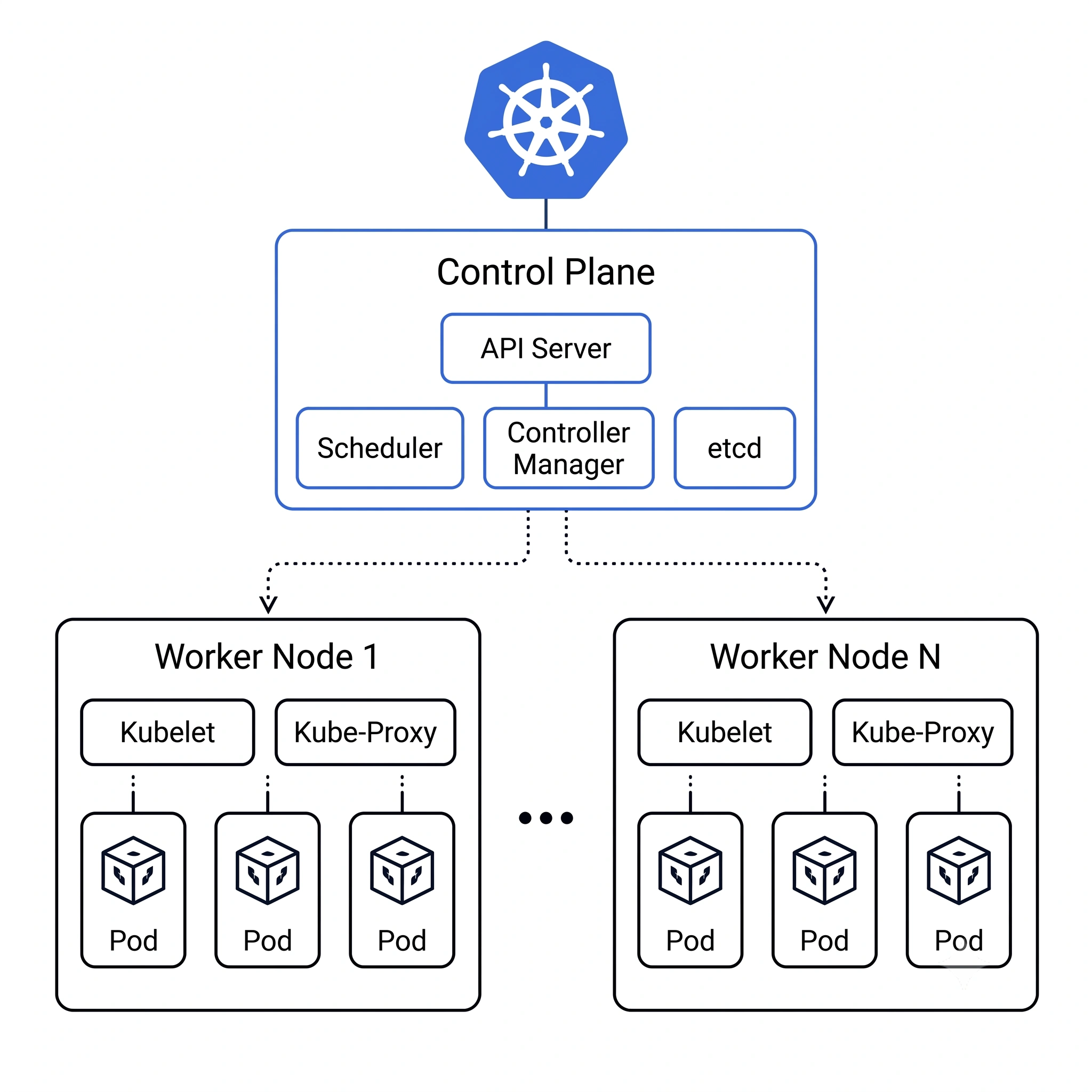
Users → Ingress (NGINX / ALB) → Service (Load Balancer) → Deployment of Pods (Containers) with a Horizontal Pod Autoscaler, backed by a Vector Store (Milvus / Pinecone / FAISS), Database (PostgreSQL / MySQL), and Cache (Redis).
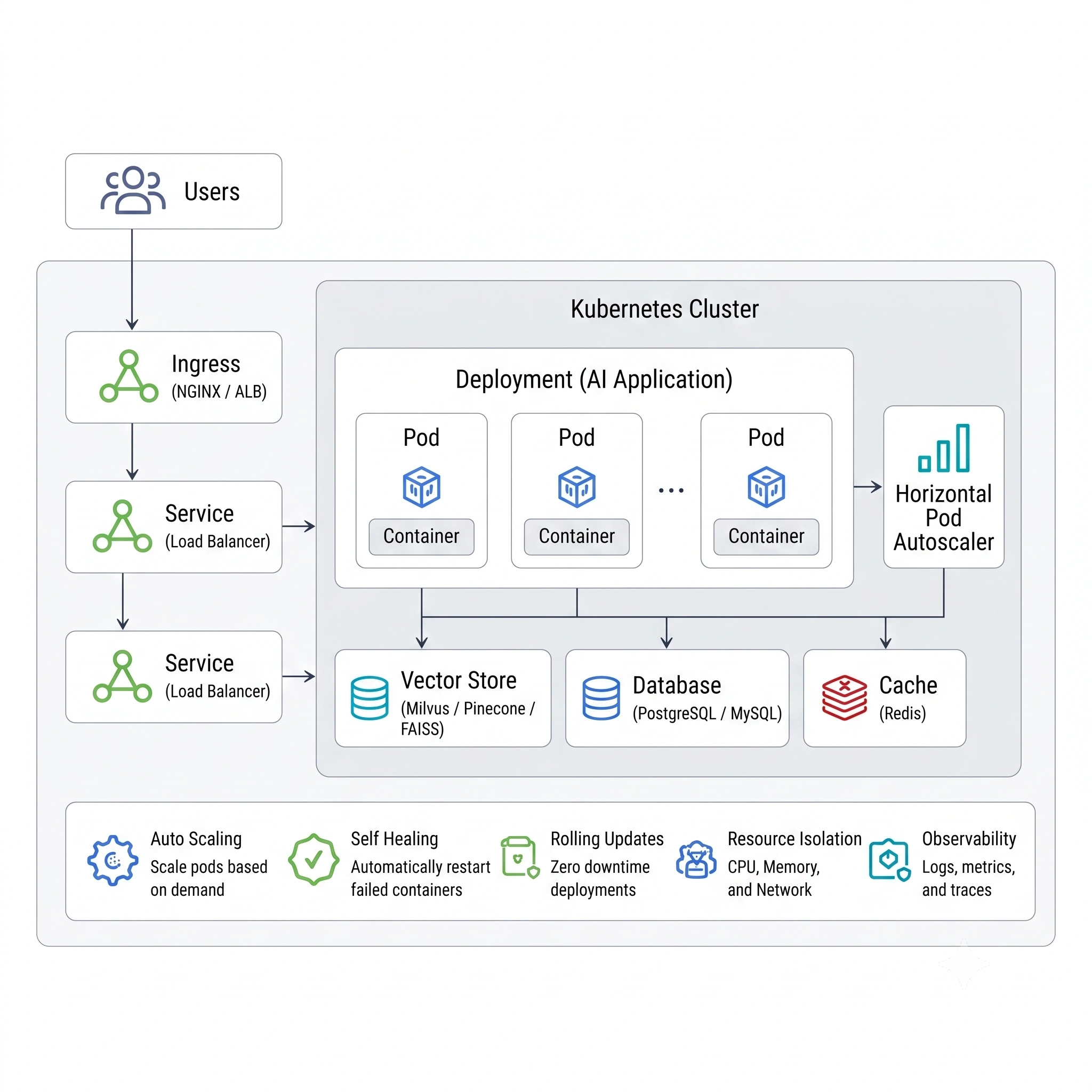
User / Client → Ingress (API Gateway) → Host Agent (Coordinator) → Worker Agents (Research, Analysis, Execution), sharing a Vector Store, Database, Cache, and Message Queue, plus Tools & Integrations (Search API, Web Scraping, Code Execution, Email/Slack, Business APIs, Files/Storage).
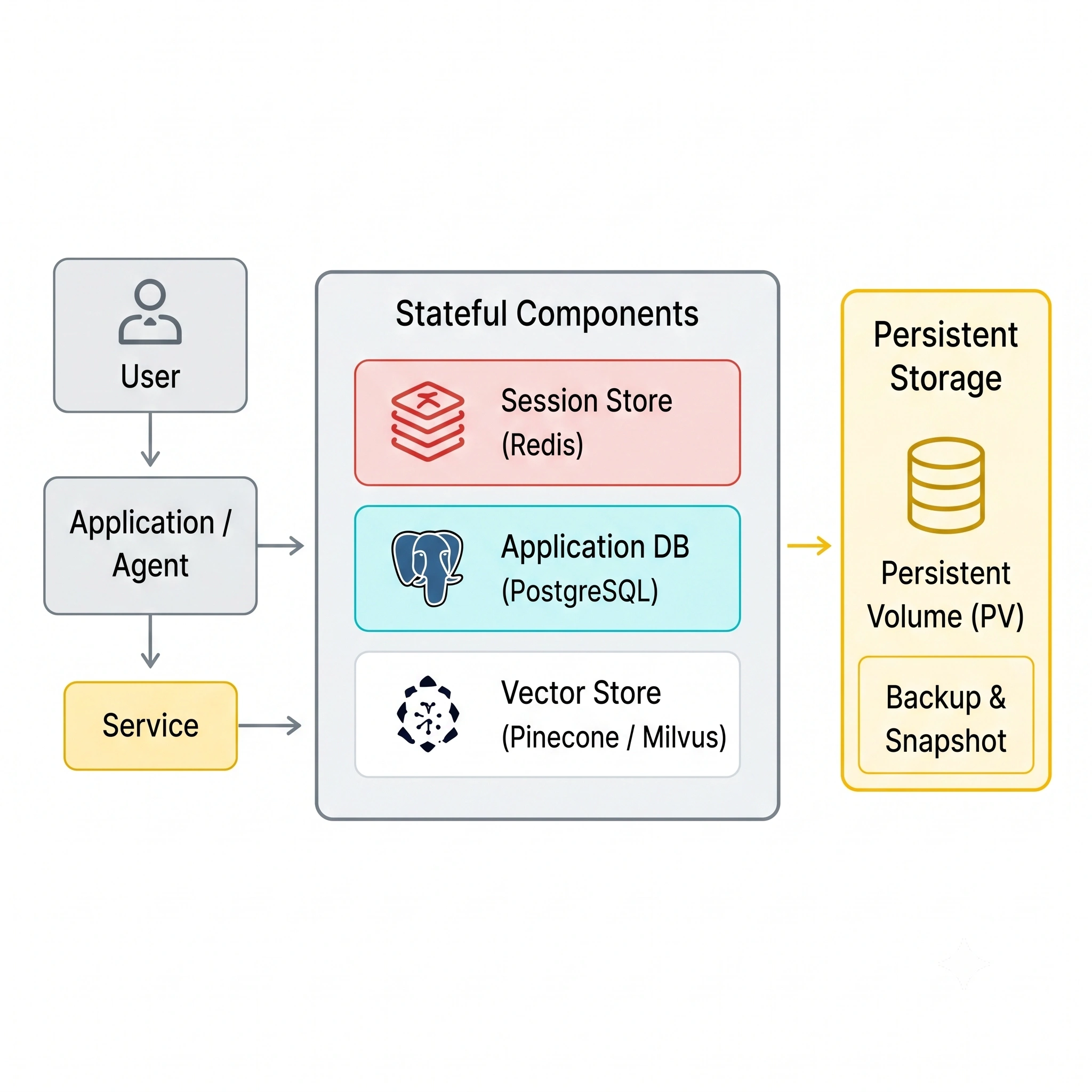
User → Application / Agent → Service, backed by Stateful Components (Session Store / Redis, Application DB / PostgreSQL, Vector Store / Pinecone / Milvus) and Persistent Storage with Backup & Snapshot.
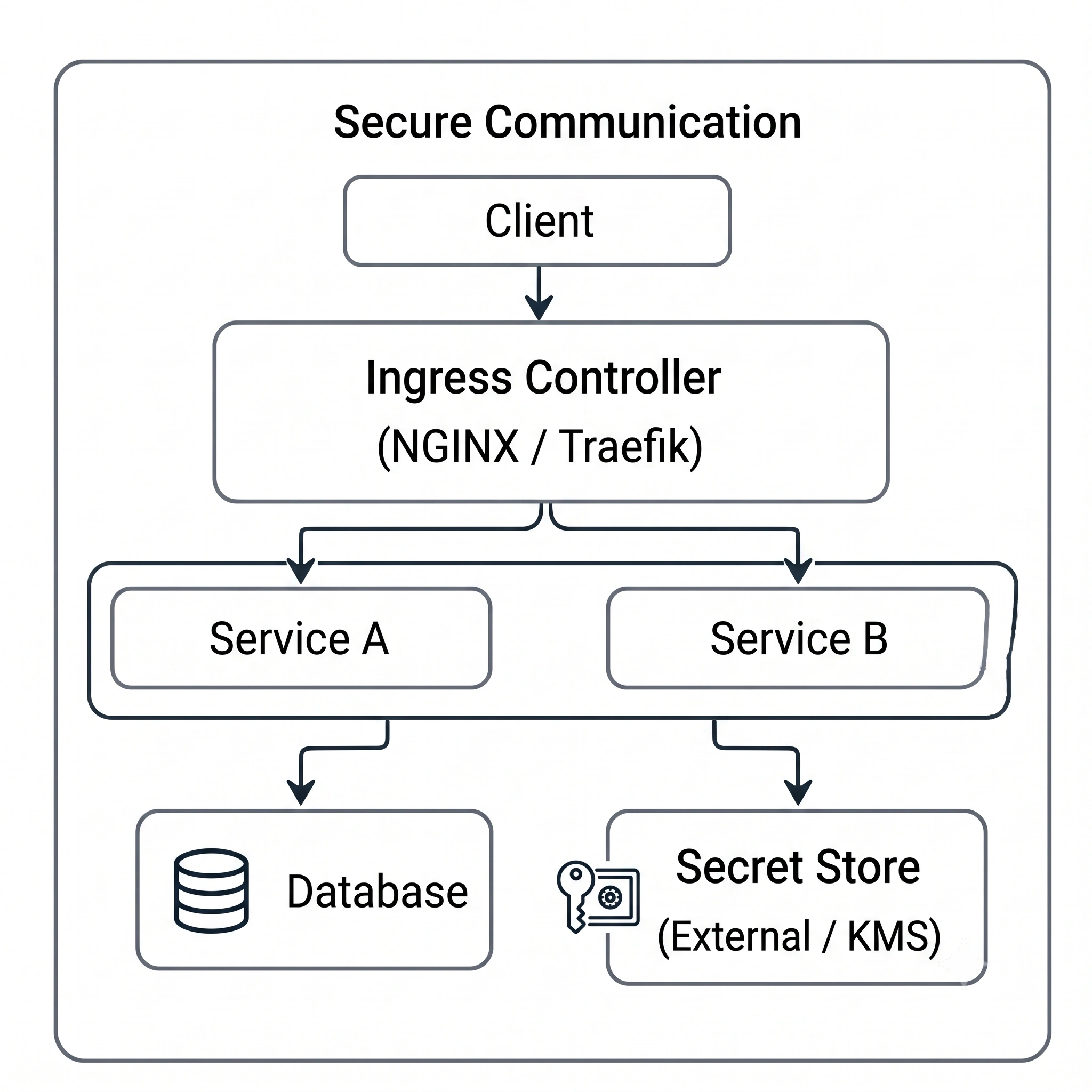
Network Policies, RBAC, Secrets Management, TLS / mTLS, and Pod Security govern secure communication between an Ingress Controller (NGINX / Traefik), Services, a Database, and a Secret Store (External / KMS).
Cloud AI Runtime Architectures
Cross-Cloud AI Runtime Architecture
Deploy across AWS, Azure, and GCP with centralized routing, governance, and observability.
Best performance with geo routing.
High availability across clouds.
Avoid vendor lock-in and single points of failure.
Cost optimization across providers.
Unified governance and compliance.
Centralized observability and operations.
Cloud Selection Guide
Mature ecosystem and global scale · Advanced agent runtimes (AgentCore) · Cost-effective serverless (Lambda, Fargate) · Strong observability and security services.
AWS Lambda, Amazon ECS (Fargate), Amazon EKS (Kubernetes), Amazon EC2 (Instances) — behind Amazon API Gateway and Amazon CloudFront.
Amazon Bedrock (Foundation Models), Amazon SageMaker (ML Ops), Amazon Comprehend (NLP), Amazon Rekognition (Vision).
Amazon S3, RDS, OpenSearch, ElastiCache (Redis), AWS Secrets — monitored with CloudWatch, X-Ray, CloudTrail, GuardDuty, and AWS Config.