Governance & Constitutional Systems · 2013–2016

Supreme Court
Advocacy &
AI Architecture

Citizen-led constitutional advocacy at India's apex judicial forum — seven Public Interest Litigations pursued as petitioner-in-person, directly informing a governance-first approach to AI platform design.

7 PILs Filed Article 32 · PIL Jurisdiction Petitioner-in-Person CJI H. L. Dattu Tenure Responsible AI Governance
Scroll

Citizen-Led Constitutional Advocacy

Between 2013 and 2016, I independently pursued seven Public Interest Litigations before the Supreme Court of India, appearing as petitioner-in-person in matters of constitutional and public interest. These were not institution-backed cases, not NGO-sponsored actions, and not proxy filings.

Each petition cleared registry scrutiny and preliminary judicial screening, was listed before the Bench, and was heard by the Court across multiple hearings before being disposed of as part of the judicial process.

Matters that do not meet judicial thresholds do not reach the Bench. The fact that these were listed and heard reflects that the issues raised met the Court's threshold for judicial consideration in PIL jurisdiction.

This body of work is presented not as a legal career, but as evidence of engagement with the highest level of institutional governance — navigating constitutional processes, formal procedures, and judicial scrutiny to bring public-interest concerns into the apex constitutional system.

Complex systems only become real when engaged at the level where authority and governance reside.

3
Years of Active Advocacy
2013 through 2016 — from first PIL filing through disposal of all matters by the Supreme Court.
100%
Registry Clearance Rate
All seven petitions cleared Supreme Court registry scrutiny and preliminary judicial screening — listed and heard before the Bench.
Judicial Recognition
oral acknowledgement
Efforts as petitioner-in-person were orally acknowledged by Hon'ble Chief Justice H. L. Dattu during proceedings (2014–2015).

Advocacy Timeline

From the first citizen-initiated petition to the disposal of all matters by India's apex constitutional forum — a complete record of institutional engagement spanning three years.

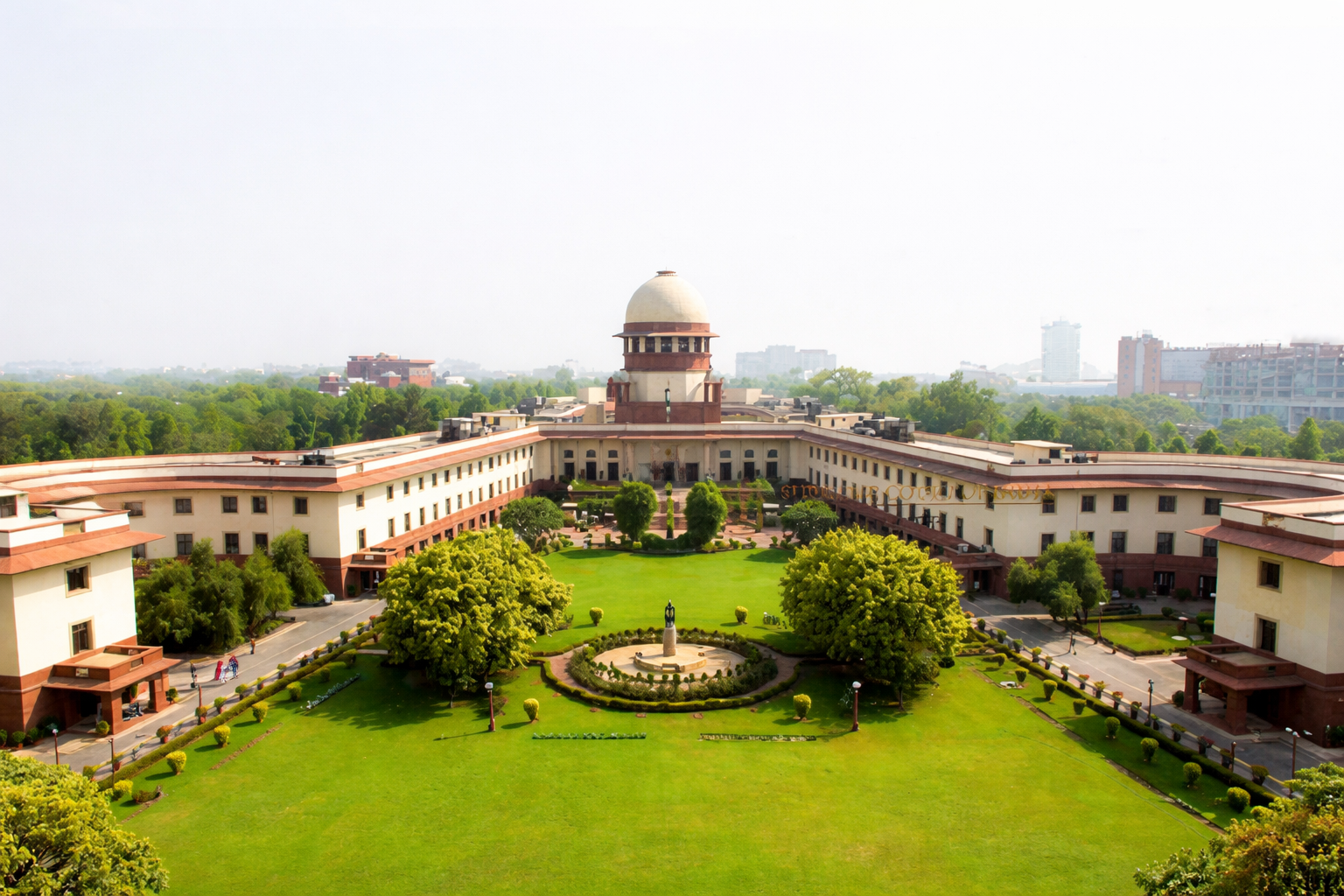
Constitutional advocacy archival visual

This phase represents institutional exposure and governance literacy, not legal practice — shaping how I design governable systems today.

2013
Initiated first PIL as petitioner-in-person — constitutional petition under Article 32 drafted and filed before the Supreme Court Registry.
2013 – 2014
Multiple PILs registered under PIL-W jurisdiction. Each petition cleared registry scrutiny and preliminary judicial screening protocols.
2013 – 2016
Pursued a total of seven PILs through registry scrutiny, judicial screening, and multiple hearings — managing the full lifecycle of each matter as petitioner-in-person.
2014 – 2015
Matters heard during the tenure of Chief Justice H. L. Dattu. Efforts orally acknowledged by the Hon'ble Chief Justice during proceedings.
2013 – 2016
All matters heard and disposed of by the Supreme Court of India — a normal outcome within constitutional litigation processes, with each having crossed formal judicial thresholds.
Translated to Systems Leadership

Each dimension of constitutional advocacy maps directly to how I architect and operate production AI systems, MLOps pipelines, and enterprise governance frameworks today.

End-to-End Institutional Ownership
Owned the full lifecycle of seven citizen-led constitutional petitions — from issue framing and documentation to registry processes and in-person hearings. Mirrors how I design and deliver AI platforms, MLOps systems, and production pipelines with full ownership.
Operating Within Formal Governance Frameworks
Worked within Supreme Court procedural systems, compliance protocols, and constitutional standards — directly analogous to regulated enterprise environments and compliance-driven AI deployments under audit constraints.
Problem Framing Under Institutional Constraints
Translated civic issues into formal constitutional questions acceptable to the apex judicial forum — similar to converting business problems into deployable AI system architectures under technical and regulatory constraints.
Resilience Under Institutional Filtering
Engaged repeatedly with a system designed to filter submissions through high judicial thresholds — building tolerance for institutional scrutiny and outcome uncertainty, directly applicable to production AI systems under regulatory oversight.
Stakeholder Interface at the Highest Level
Direct interface with apex judicial processes — comparable to executive-level governance boards, regulatory committees, and enterprise production cutovers requiring precision communication.
Outcome Ownership
Personally owned preparation, presentation, and engagement outcomes — the same ownership model governing my work on production AI platforms, MLOps pipelines, and GenAI systems in enterprise environments today.

Governance-First Execution Model

Applied from constitutional systems → production AI platforms. The same execution model: registry scrutiny → bench mirrors data → MLOps.

Supreme Court Advocacy · 7 PILs
01 Registry Scrutiny — formal filing, documentation, procedural compliance
02 Judicial Screening — constitutional threshold evaluation
03 Listed & Heard by The Bench — in-person advocacy, multiple hearings
04 Disposal — formal outcome within constitutional processes
Constitutional Capabilities
Article 32 Petitions PIL-W Jurisdiction Registry Protocols Judicial Advocacy Constitutional Framing Procedural Compliance
AI Platform Pipeline · Production
01 Data — ingestion, lineage, governance, quality controls
02 ML Pipeline — model development, training, validation protocols
03 MLOps — deployment, monitoring, audit trail, reproducibility
04 GenAI + Responsible AI / Governance Layer
AI Platform Capabilities
AI Platforms MLOps Systems Cloud Governance Responsible AI GenAI Production Data Lineage
"

This body of work demonstrates my ability to engage complex, high-stakes institutional systems at the highest level of governance — the same execution model I now apply to Responsible AI, GenAI platforms, and MLOps systems in production environments.

Oral acknowledgment by Hon'ble Chief Justice H. L. Dattu · Supreme Court of India · 2014–2015
Constitutional advocacy case visual

Constitutional Petitions

Seven public interest litigations filed before the Supreme Court of India — each cleared registry scrutiny and was heard across multiple hearings. (Only 3 cases related Record of Proceedings are showcased here)

Writ Petition (PIL) · 01
920/2013

A.Rajesh Vs. UNION OF INDIA

Filing DETAILS
Writ Petition (PIL) · 02
507/2014

A.Rajesh Vs. UNION OF INDIA

Filing DETAILS
Writ Petition (PIL) · 03
533/2014

A.Rajesh Vs. UNION OF INDIA

Filing DETAILS